


What is Current Control? And Why It’s Becoming the Mainstream in Electric Mobility

In electric rideables such as electric skateboards and electric surfboards, the control method directly determines the riding experience. Among these methods, “Current Control” is gradually replacing traditional duty cycle control and speed control, becoming the preferred choice.
The Essence of Current Control: Direct Control of "Torque"
The core of current control is to directly control the motor's output torque.
This means:
- Smoother, more linear acceleration
- More comfortable starting without abruptness
- An operating experience closer to driving a car
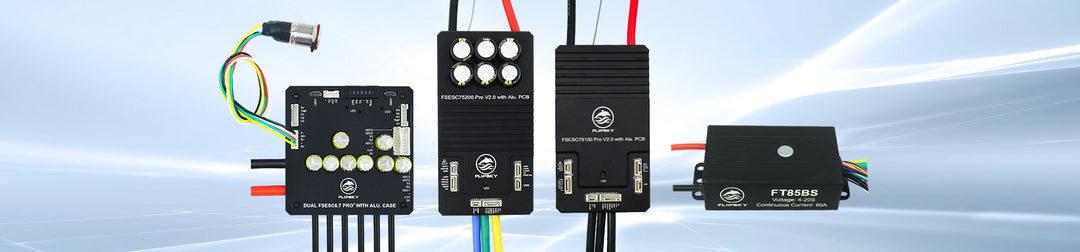
Electronic speed controllers like Flipsky’s FSESC and FTESC series are based on this control logic, offering users a more natural and stable riding experience.
Differences from Duty Cycle Control and Speed Control
1. Duty Cycle Control (Voltage Control)
Duty cycle control essentially controls the output voltage, thereby indirectly affecting motor speed:
- Higher duty cycle → Higher motor speed
- But torque cannot be directly controlled
A more critical issue:
The remote controller relies on ADC analog sampling, which inevitably suffers from signal drift. This leads to:
- Obvious low-speed jitter
- Unstable control
- Poor user experience
2. Speed Control
Speed control, similar to duty cycle control, regulates the motor based on a target speed:
- Less direct response
- Less sensitive under complex road conditions
- Not suitable for the fine control required in rideables
Why Are Rideables Better Suited to Current Control?
The reason is simple: Humans are far more sensitive to "force" than to "speed".
The advantages of current control include:
- More natural acceleration feedback (like pressing a gas pedal)
- More stable low-speed performance
- Safer handling experience
This is why mainstream high-end ESCs (such as Flipsky’s VESC and FTESC series) all adopt current control algorithms.
Market Status: Why Such a Big Difference in Experience?
Currently, many electric skateboard ESCs on the market still use duty cycle control solutions.
The result is:
- Even with the same motor and battery configuration
- The riding experience can be completely different
ESCs that use current control significantly improve overall vehicle performance, making the product more competitive.
Conclusion
If you are developing or upgrading electric skateboards, SUP thrusters, or other electric rideables:
- Current Control = Better user experience
- Duty cycle / Speed control = Lower cost but compromised experience
Choosing ESCs that support current control (such as Flipsky’s FSESC and FTESC series) is not just a technical upgrade—it’s an upgrade in user experience.
For more details, please review our official website and social channels.
https://flipsky.net/
https://www.youtube.com/c/FlipskyTech
https://www.instagram.com/flipsky_tech/
https://www.facebook.com/FlipskyTech




Leave a comment